The Story Arrives Before the Facts Do
You walk into a conversation already knowing how it's going to go. That's not cynicism, that's just how brains work. Your prior is running the show before a single word is spoken.
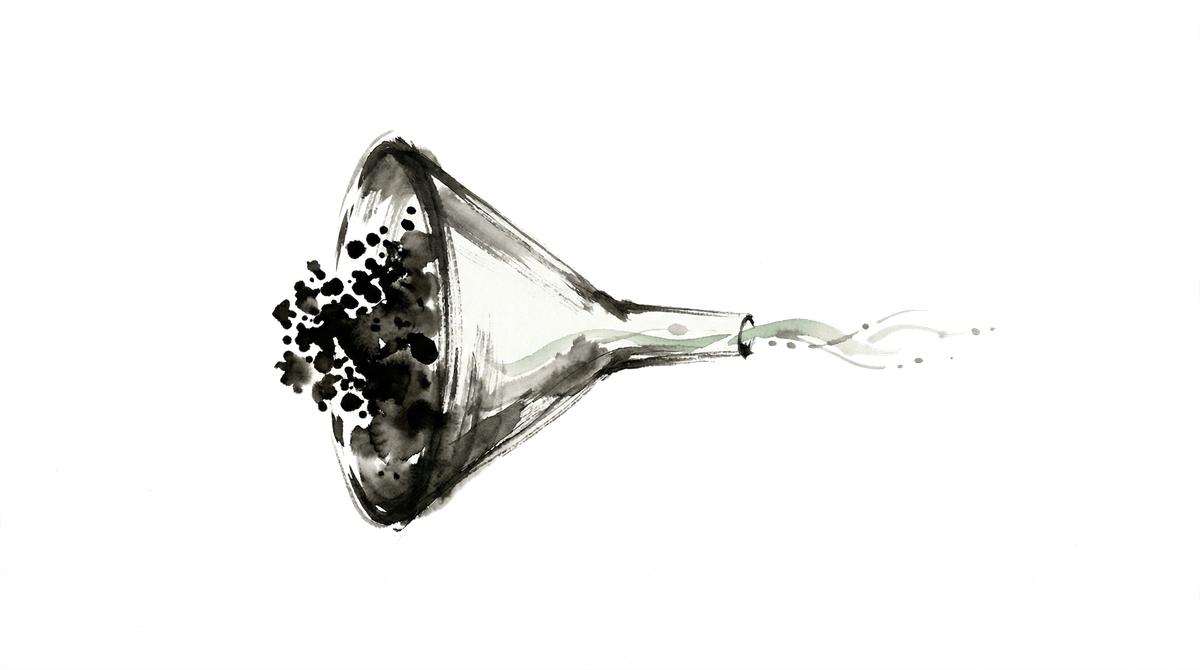
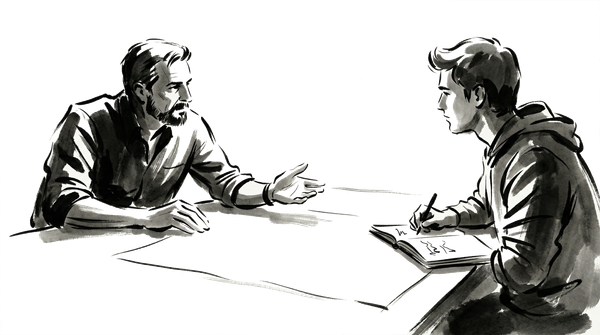
You walk into a conversation already knowing how it's going to go. Your partner is defensive. Your coworker is lazy. Your boss doesn't respect you. You haven't said a word yet, and the verdict is already in.
That's not cynicism. That's just how brains work. And understanding it might be the most useful thing you do this week.
Here's the deal: your brain doesn't experience reality and then form opinions. It forms opinions first, and then experiences reality through them. Neuroscientists and cognitive psychologists call this predictive processing. Your brain is basically a prediction machine, constantly generating expectations and then checking incoming data against them. The raw sensory input you get is way less important than the story your brain uses to sort it.
In Bayesian terms, we call that story a prior, a pre-existing belief you're carrying before any new evidence shows up. Priors aren't bad. They're actually useful. They let you navigate the world without having to re-evaluate everything from scratch every single moment. But they have a serious downside: they're sticky. New evidence gets filtered through them, and anything that fits the prior gets amplified, while anything that challenges it kind of... disappears.
Which brings us to gorillas.
In 1999, psychologists Daniel Simons and Christopher Chabris ran a now-famous experiment. They asked participants to watch a video of people passing a basketball and count the passes. Simple enough. But halfway through the video, someone in a gorilla suit walked right through the middle of the scene, stopped, beat their chest, and walked off. Around half the participants never saw it. Not because they were dumb or distracted, but because their attention was locked onto a task, and the gorilla didn't fit the expected pattern. The brain, busy counting passes, literally filtered it out.
This is called inattentional blindness. And it happens in your relationships constantly.
When you've decided someone is selfish, you count every time they don't offer to help. You don't count the times they do, because those don't fit the story. When you believe a conflict is your fault, you amplify every criticism and let the compliments slide right past. Your prior is running the show, and new information only gets through if it plays by the prior's rules.
The problem compounds in arguments. You go into a fight expecting to be dismissed, so you interpret a pause as contempt and a sigh as disrespect. The other person goes in expecting to be attacked, so they read your tone as aggressive even when you're trying to stay calm.
What can you do about it? The first step, honestly, is just knowing this is happening. Priors don't dissolve the moment you learn about them, but awareness creates a small gap between perception and reaction. In that gap you can ask: am I seeing what's actually here, or am I seeing what I predicted I'd see?
A more practical move is to actively name your prior before you walk into a hard conversation. "I expect this person to shut me down." Say it out loud if you can. Research on debiasing suggests that surfacing an assumption explicitly makes it easier to hold loosely rather than treat as fact.
The story arrives before the facts do. It always will. But you don't have to let it write the ending.